| |
|
|
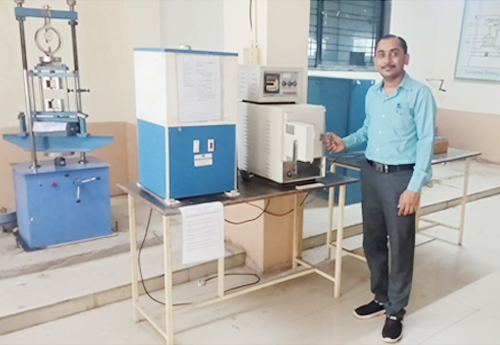
Material Science and Metallurgy Lab |
|
|
|
 |
|
Introduction |
|
| This
laboratory helps students understand the
properties, structure, and behaviour of
engineering materials and metals through
practical experiments such as hardness
testing, heat treatment, and microscopic
examination. |
| |
| Key
Learning Outcomes |
|
-
Understand properties of ferrous and
non-ferrous materials.
-
Perform hardness and impact tests on
materials.
-
Study heat treatment processes and
their effects.
-
Identify microstructures of metals
using metallography.
-
Select suitable materials for
engineering applications.
|
|
| |
|
|
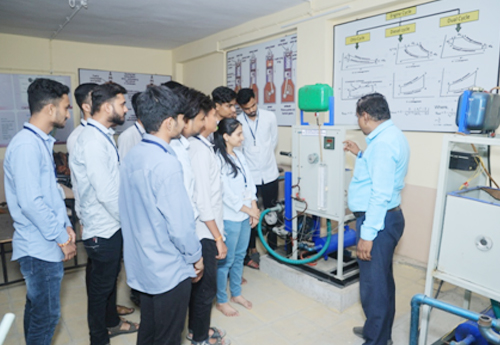
INTERNAL COMBUSTION ENGINE LAB |
|
|
|
 |
|
Introduction |
|
| This
lab provides practical knowledge of
petrol and diesel engines, their
performance, combustion process, fuel
systems, and efficiency measurements. |
| |
| Key
Learning Outcomes |
|
-
Understand construction and working
of IC engines.
-
Conduct performance and efficiency
tests on engines.
-
Measure fuel consumption and engine
power.
-
Analyze engine emissions and
combustion characteristics.
-
Compare two-stroke and four-stroke
engine operations.
|
|
| |
|
|
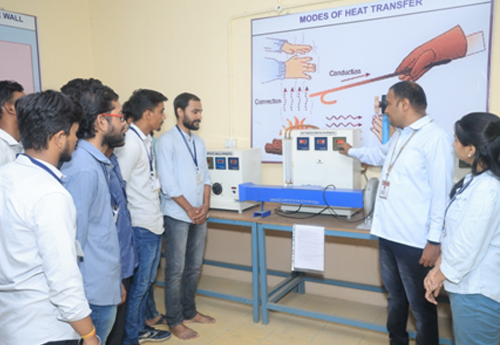
HEAT TRANSFER / REFRIGERATION AND AIR CONDITIONING
LAB |
|
|
|
 |
|
Introduction |
|
| This
laboratory focuses on heat transfer
mechanisms and refrigeration systems
used in cooling and air conditioning
applications. |
| |
| Key
Learning Outcomes |
|
-
Study conduction, convection, and
radiation heat transfer.
-
Analyze performance of refrigeration
and air conditioning systems.
-
Calculate heat transfer coefficients
and efficiencies.
-
Understand working of compressors,
condensers, and evaporators.
-
Perform experiments on refrigeration
cycles and psychrometry.
|
|
| |
|
|
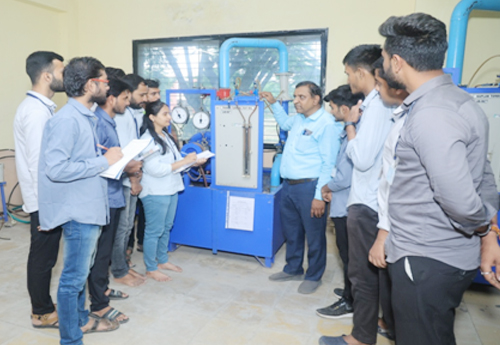
FLUID MECHANICS LAB |
|
|
|
 |
|
Introduction |
|
| This
lab develops practical understanding of
fluid properties, fluid flow behavior,
and hydraulic machines through
experiments and measurements. |
| |
| Key
Learning Outcomes |
|
-
Understand principles of fluid flow
and pressure measurement.
-
Determine flow rate, discharge, and
fluid losses in pipes.
-
Study characteristics of pumps and
turbines.
-
Verify Bernoulli’s theorem and flow
equations experimentally.
-
Analyze laminar and turbulent flow
conditions.
|
|
| |
|
|
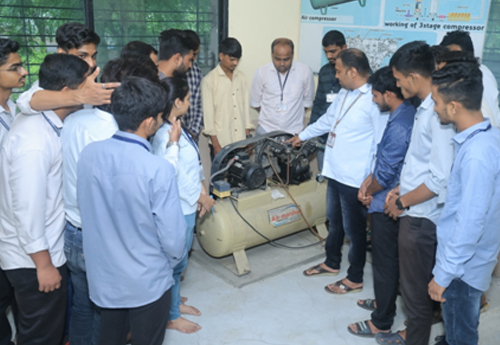
THERMAL LAB |
|
|
|
 |
|
Introduction |
|
| The
thermal lab provides hands-on experience
in thermal engineering concepts such as
boilers, turbines, compressors, and
thermal energy systems. |
| |
| Key
Learning Outcomes |
|
-
Understand operation of thermal
engineering equipment.
-
Measure thermal efficiency and
energy losses.
-
Analyze steam and gas power cycles.
-
Conduct experiments on boilers and
turbines.
-
Apply thermodynamic principles to
practical systems.
|
|
| |
|
|
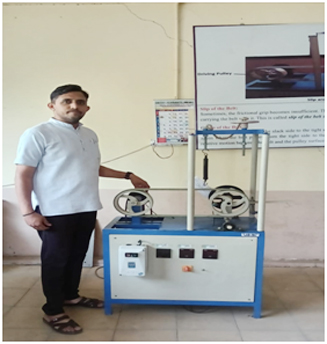
THEORY OF MACHINE AND VIBRATION LAB |
|
|
|
|
 |
|
Introduction |
|
| This
laboratory helps students study
mechanisms, balancing, gyroscopic
effects, and vibration analysis used in
mechanical systems. |
| |
| Key
Learning Outcomes |
|
-
Understand motion analysis of
mechanical mechanisms.
-
Study balancing of rotating and
reciprocating masses.
-
Analyze vibration characteristics of
mechanical systems.
-
Perform experiments on governors,
gyroscopes, and cams.
-
Understand methods of vibration
control and isolation.
|
|
| |
|
|
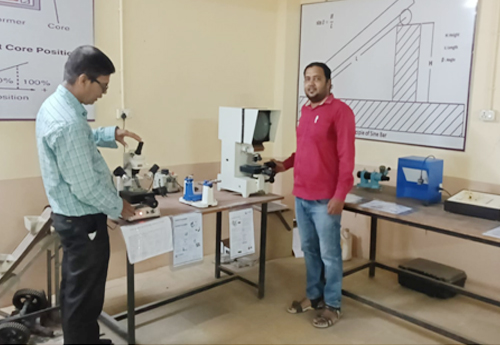
MECHATRONICS / METROLOGY AND QUALITY CONTROL LAB |
|
|
|
|
 |
|
Introduction |
|
| The
CAD lab provides training in
computer-aided drafting and modeling for
engineering design and manufacturing
applications. |
| |
| Key
Learning Outcomes |
|
-
Understand sensors, actuators, and
automation systems.
-
Use precision measuring instruments
effectively.
-
Study calibration and error analysis
methods.
-
Apply quality control tools and
inspection techniques.
-
Develop knowledge of industrial
automation and control systems.
|
|
| |
|
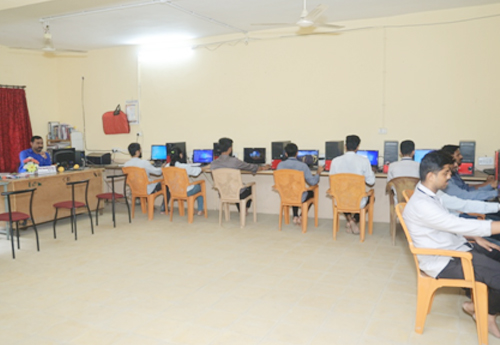
| CAD
LAB |
|
|
|
|
 |
|
Introduction |
|
| This
laboratory helps students study
mechanisms, balancing, gyroscopic
effects, and vibration analysis used in
mechanical systems. |
| |
| Key
Learning Outcomes |
|
-
Create 2D engineering drawings and
3D models.
-
Use CAD software for design and
drafting applications.
-
Understand dimensioning and assembly
drawings.
-
Develop product visualization and
modeling skills.
-
Apply CAD tools in engineering
design projects.
|
|
| |
|
|
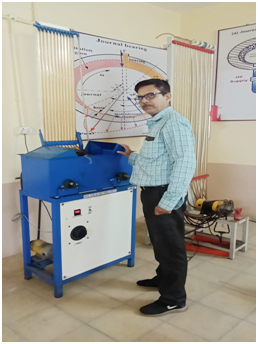
TRIBOLOGY LAB |
|
|
|
|
 |
|
Introduction |
|
| This
laboratory deals with the study of
friction, wear, lubrication, and surface
interactions in mechanical components. |
| |
| Key
Learning Outcomes |
|
-
Understand principles of friction
and lubrication.
-
Analyze wear characteristics of
engineering materials.
-
Study different lubricants and
lubrication methods.
-
Perform experiments on bearing and
surface performance.
-
Improve machine efficiency and
component life through tribology
concepts.
|
|
| |
|