| |
|
Electrical
Engineering - Laboratories :- |
|
| |
|
Electrical
Machine Laboratory : |
|
|
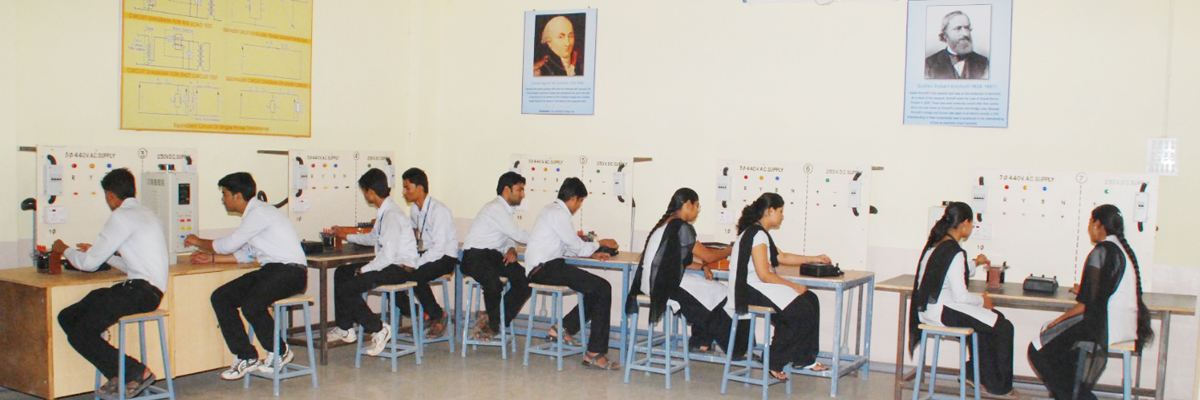
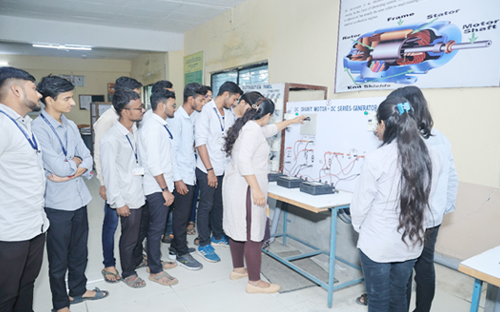
The
Electrical Machines Laboratory is an
essential part of the Electrical
Engineering curriculum, where students
gain practical knowledge of various
electrical machines. This lab provides
hands-on experience to help students
understand the construction, working,
and testing of different machines such
as transformers, DC machines, induction
motors, synchronous machines, and
alternators.
|
Key Learning Outcomes: |
| |
-
Analysis of resistive,
inductive, and capacitive
circuits
-
Verification of network
theorems (Thevenin’s,
Norton’s, Superposition,
Maximum Power Transfer,
etc.)
-
Transient and steady-state
analysis of RLC circuits
-
Use of tools like
multimeters, function
generators, oscilloscopes,
and simulation software
-
Design and testing of basic
electrical networks
|
|
 |
|
This lab
enhances students' problem-solving
abilities and circuit analysis skills,
forming a strong foundation for advanced
electrical engineering studies and
real-world applications. |
| |
|
|
|
|
Network
Analysis Laboratory: |
|
|
The
Network Analysis Laboratory is designed
to provide students with a deep
understanding of electrical circuits and
their behavior under various conditions.
It supports the theoretical concepts
taught in circuit theory by allowing
students to practically verify and
analyze different electrical networks.
|
Key Learning Outcomes: |
| |
-
Analysis of resistive,
inductive, and capacitive
circuits
-
Verification of network
theorems (Thevenin’s,
Norton’s, Superposition,
Maximum Power Transfer,
etc.)
-
Transient and steady-state
analysis of RLC circuits
-
Use of tools like
multimeters, function
generators, oscilloscopes,
and simulation software
-
Design and testing of basic
electrical networks
|
|
|
|
This lab
enhances students' problem-solving
abilities and circuit analysis skills,
forming a strong foundation for advanced
electrical engineering studies and
real-world applications. |
|
|
| |
|
Measurement
Laboratory: |
|
|
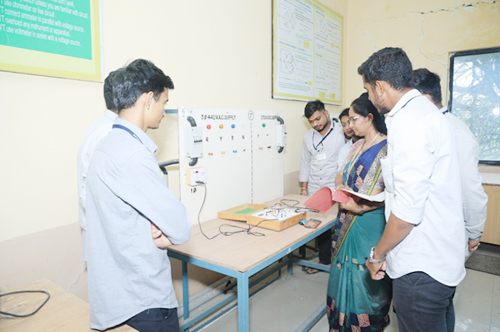
The Electrical
Measurement Laboratory is dedicated to
providing students with practical knowledge
of measuring electrical quantities with
precision and accuracy. It bridges the gap
between theoretical concepts and their
real-world applications in measurement and
instrumentation.
|
Key
Learning Outcomes: |
| |
-
Understanding the principles and
operation of measuring
instruments
-
Calibration and use of devices
like ammeters, voltmeters,
wattmeters, energy meters, and
multimeters
-
Measurement of resistance,
inductance, and capacitance
using bridges (Wheatstone,
Schering, Maxwell, etc.)
-
Testing of instrument
transformers (CTs and PTs)
-
Introduction to digital
instruments and data acquisition
systems
|
|
 |
|
This lab
enhances students' problem-solving abilities
and circuit analysis skills, forming a
strong foundation for advanced electrical
engineering studies and real-world
applications. |
|
|
|
|
|
Control Systems
Laboratory: |
|
|
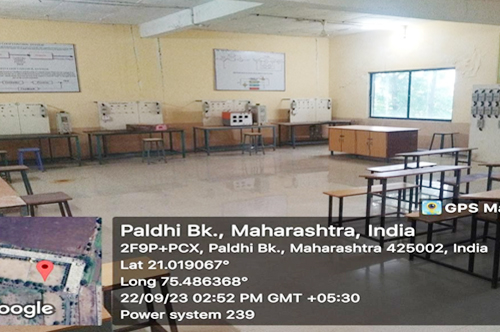
The Control
Systems Laboratory is designed to help
students understand the modeling, analysis,
and design of control systems used in
electrical, electronic, and mechanical
engineering applications. It enables
practical learning of both classical and
modern control techniques.
|
Key
Learning Outcomes: |
| |
-
Study of open-loop and
closed-loop systems
-
Time-domain and frequency-domain
analysis of control systems
-
Implementation of PID
controllers and tuning methods
-
Stability analysis using Bode
plots, Nyquist plots, and Root
Locus techniques
-
Hands-on experience with control
system trainer kits, servo
motors, and MATLAB / Simulink
simulations
|
|
 |
|
This lab
strengthens students' understanding of how
to design and analyze control systems for
real-world engineering problems in
automation, robotics, power systems, and
industrial control. |
|
|
|
|
|
|
|
Power System
Laboratory: |
|
|
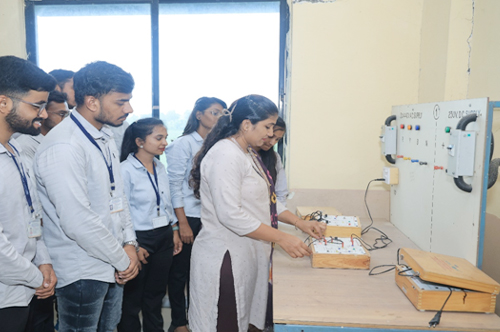
The Power
System Laboratory provides students with
practical exposure to the operation,
analysis, and protection of electrical power
systems. It focuses on the generation,
transmission, distribution, and utilization
of electrical energy, helping students
understand the real-world challenges of
modern power networks.
|
Key
Learning Outcomes: |
| |
-
Study of open-loop and
closed-loop systems
-
Time-domain and frequency-domain
analysis of control systems
-
Implementation of PID
controllers and tuning methods
-
Stability analysis using Bode
plots, Nyquist plots, and Root
Locus techniques
-
Hands-on experience with control
system trainer kits, servo
motors, and MATLAB / Simulink
simulations
|
|
 |
|
This lab
prepares students for careers in power
generation, transmission utilities, smart
grid technology, and energy management
systems by building a solid foundation in
power system engineering. |
|
|
|
|
|
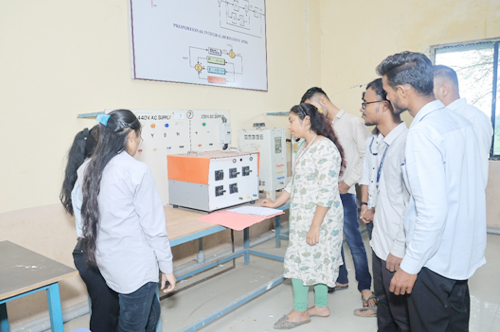
Switch Gear &
Protection Laboratory: |
|
|
The Power
System Laboratory provides students with
practical exposure to the operation,
analysis, and protection of electrical power
systems. It focuses on the generation,
transmission, distribution, and utilization
of electrical energy, helping students
understand the real-world challenges of
modern power networks.
|
Key
Learning Outcomes: |
| |
-
Study of open-loop and
closed-loop systems
-
Time-domain and frequency-domain
analysis of control systems
-
Implementation of PID
controllers and tuning methods
-
Stability analysis using Bode
plots, Nyquist plots, and Root
Locus techniques
-
Hands-on experience with control
system trainer kits, servo
motors, and MATLAB / Simulink
simulations
|
|
 |
|
This lab
prepares students for careers in power
generation, transmission utilities, smart
grid technology, and energy management
systems by building a solid foundation in
power system engineering. |
|
|
|
|
|
Switch Gear &
Protection Laboratory: |
|
|
The Switchgear
and Protection Laboratory focuses on the
study of equipment and techniques used for
the safe operation, control, and protection
of electrical power systems. This lab
enables students to understand how
electrical faults are detected and isolated
to ensure system reliability and safety.
|
Key
Learning Outcomes: |
| |
-
Study of protective devices such
as circuit breakers, relays,
fuses, and isolators
-
Understanding the operation and
characteristics of overcurrent,
differential, and distance
relays
-
Testing and coordination of
protection schemes
-
Simulation of fault conditions
and analysis of system response
-
Hands-on experience with
switchgear panels, relay testing
kits, and current/voltage
transformers
|
|
|
|
This lab plays
a critical role in preparing students for
roles in power system protection, substation
design, and industrial safety systems,
ensuring reliable and secure operation of
electrical networks. |
|
|
|
|
|
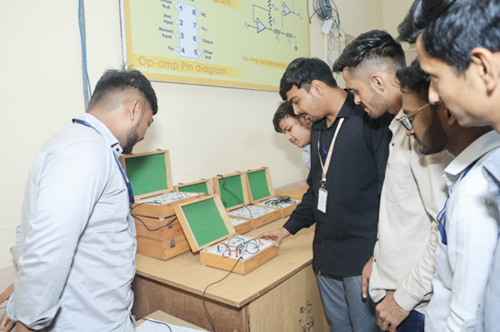
Analog & Digital
Electronics Laboratory: |
|
|
The Analog &
Digital Electronics Laboratory is designed
to provide students with practical knowledge
of both analog and digital electronic
circuits. This lab helps bridge the gap
between theoretical concepts and real-world
electronic applications.
|
Key
Learning Outcomes: |
| |
-
Design and analysis of basic
analog circuits using diodes,
transistors, and operational
amplifiers
-
Study of oscillators,
amplifiers, and filters
-
Implementation of digital logic
circuits using gates,
flip-flops, counters, and
multiplexers
-
Introduction to combinational
and sequential circuit design
-
Hands-on experience with
breadboards, digital trainers,
multimeters, and simulation
software like Multisim or
Proteus
|
|
 |
|
This lab
equips students with the essential skills
needed for electronics-based industries,
embedded systems, and further studies in
VLSI, microcontrollers, and digital system
design. |
|
|
|
|
|
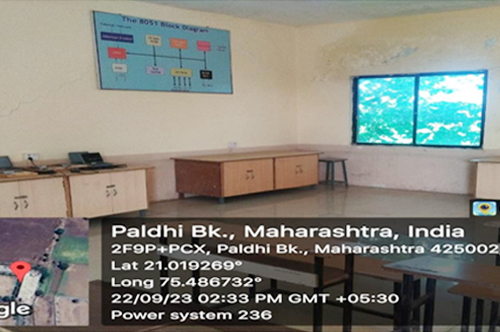
Microprocessor &
Microcontroller Laboratory: |
|
|
The
Microprocessor & Microcontroller Laboratory
introduces students to the architecture,
programming, and interfacing techniques of
microprocessors and microcontrollers. It
focuses on hands-on development of embedded
systems using assembly language and
high-level languages like C.
|
Key
Learning Outcomes: |
| |
-
Understanding the architecture
and instruction sets of 8085,
8086 microprocessors, and 8051
microcontroller
-
Writing and executing
assembly-level programs for
arithmetic, logical, and control
operations
-
Interfacing of
microprocessors/microcontrollers
with peripherals such as LEDs,
switches, LCDs, ADCs, DACs, and
sensors
-
Developing simple embedded
system applications
-
Hands-on experience with
development kits, simulators,
and embedded C programming tools
|
|
 |
|
This lab
builds foundational skills for careers in
embedded systems, IoT, robotics, and
consumer electronics design, preparing
students for both industry and research
roles. |
|
|
|
|
|
|
|